Reading time: 12 minutes
Co-creating a bike leasing portal
Evolving the bike leasing experience by redesigning Germany's leading portal through co-creation
Outcome
Deutschlands Bestes Online-Portal 2025, overall winner in the bicycle leasing portals category
DISQ / ntv · 52,000 customer ratings · fifth consecutive win
The context
A portal already leading the market
The client is a German bike leasing platform and subsidiary of a major bicycle mobility group, as well as one of the leading bicycle leasing portals in Germany, serving employers, employees, and dealers across the country. Their portal had already won top marks from users. The brief was not to fix something broken. It was to leap ahead of the competition.
The project was nearly fully remote, involving a multinational team across the Netherlands, Germany, Poland, Albania, and India. My role as UX designer was to lead the design work end-to-end, from the initial co-creation workshops on-site in Germany to the final validated redesign.
The redesign journey
Five stages, one direction
The project moved through five distinct phases: understanding the context on-site in Nürnberg, identifying the right voice and future user journey, a successful pivot in design direction, user validation, and finally bringing the redesigned elements together.
Design sprint
Three days to map the future
We used a design sprint to create the most premium bike leasing service. Day one covered the status quo: reviewing the existing portal, mapping the as-is journey, creating personas, and setting OKRs. Day two focused on the future journey: enhancing the as-is map, prioritising ideas from the parking lot, and creating the future journey. Day three was design and iteration, with a golden thread, first sketches, and wireframes.
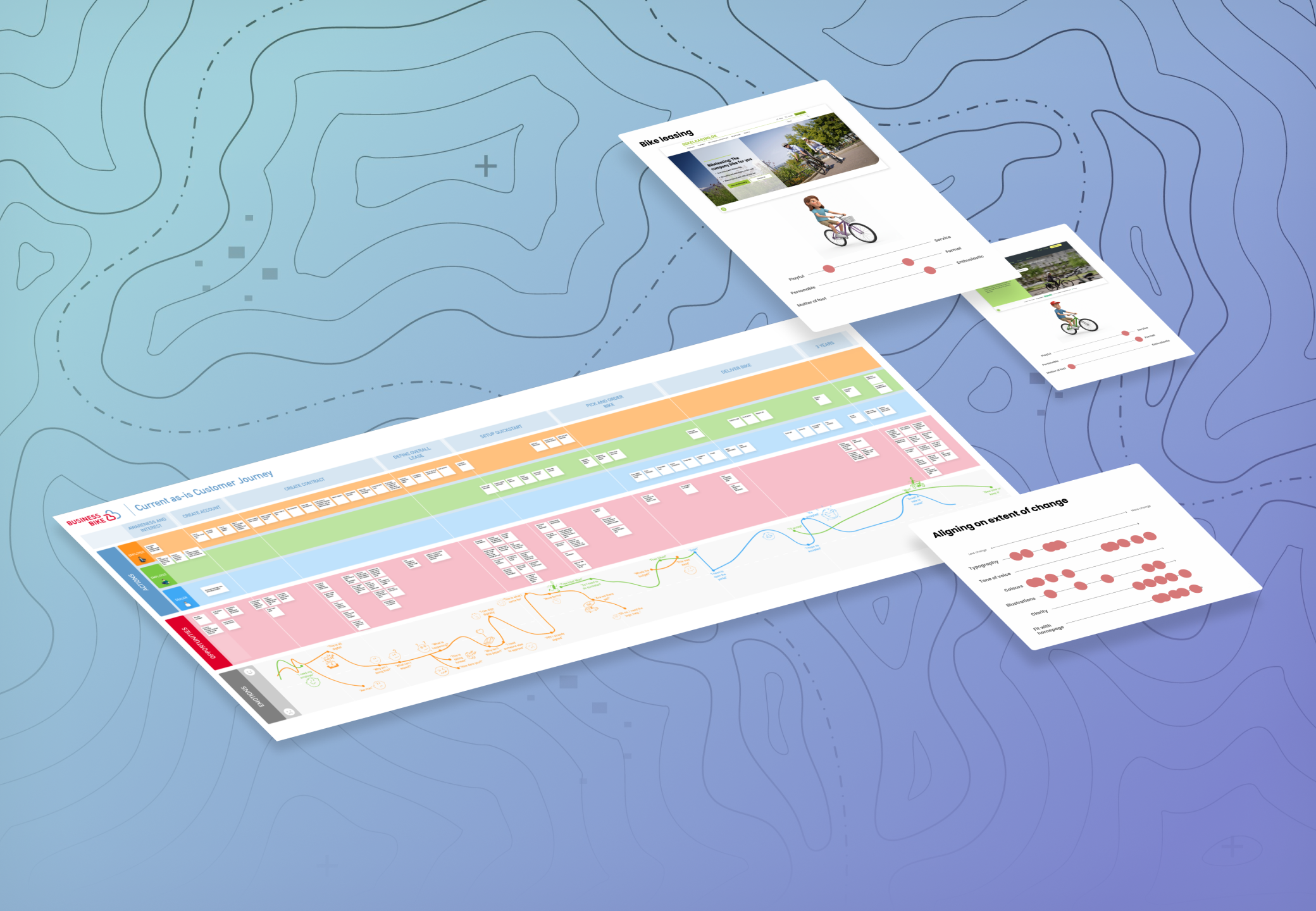
Three-day design sprint with the client team on-site in Germany
Making remote work
Four mechanisms for distributed co-design
Working remotely with a client across two countries required a deliberate collaboration structure. We built four mechanisms to keep design and client aligned throughout the project.
Synchronous
Feedback sessions
Weekly feedback sessions with key members of the client team to review progress and collect direction.
Synchronous
Sprint reviews
Bi-weekly sprint reviews where sprint outcomes were shared and final comments or feedback collected.
Asynchronous
Commentful
A Figma plugin used to send out designs on which the client team could post their comments at any time.
Asynchronous
Figma comments
The product owner had direct access to the Figma board and left comments throughout the design process.
Design and development
Two sides, same coin
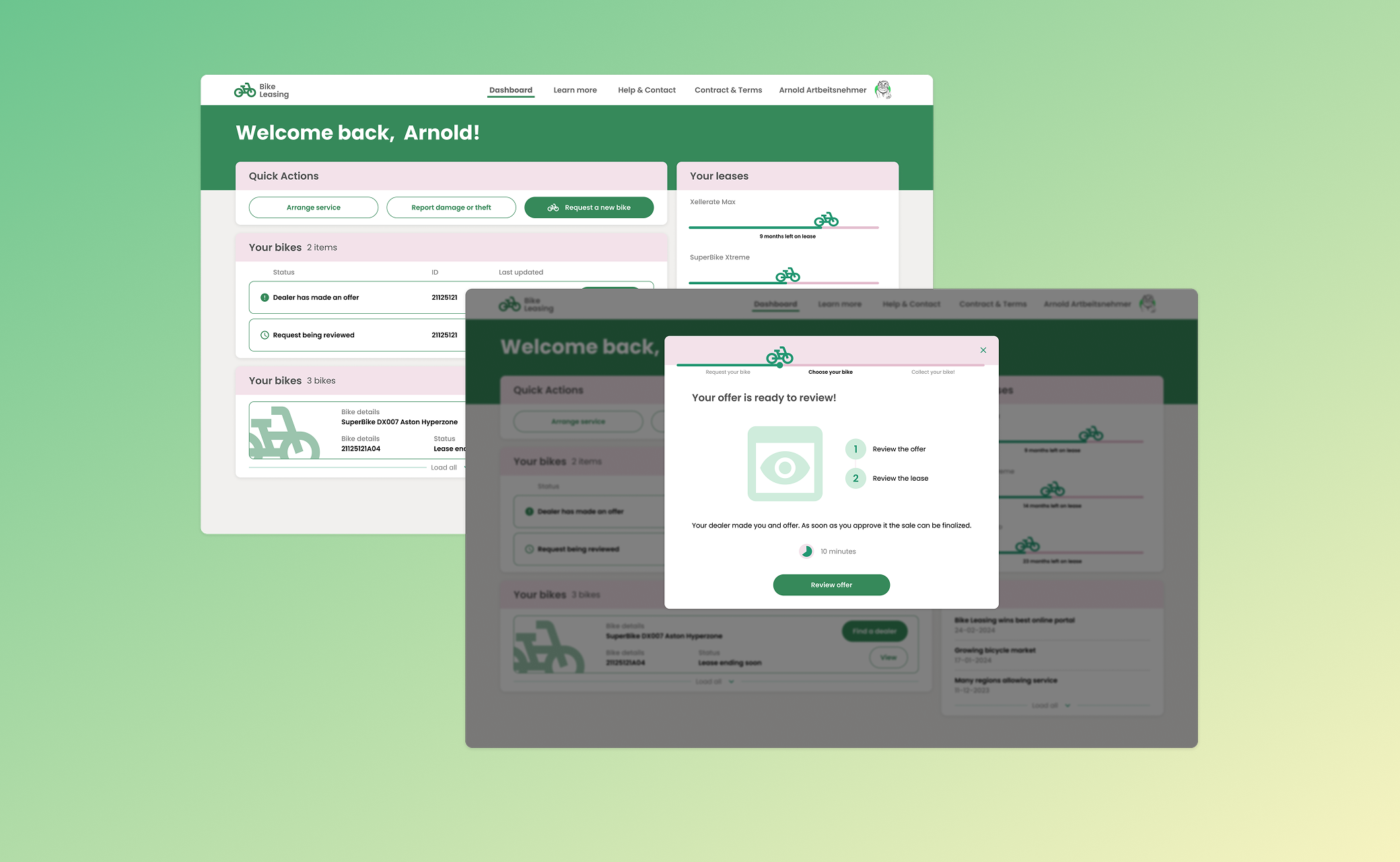
Since we were designing for production, we were in constant conversation with our development team about feasibility. One key decision: our initial design used modal views to convey persistence across the flow. After consulting with developers, we learned the implementation effort for modals was high. We pivoted to full-screen views, which ultimately produced a cleaner experience.
User validation
Validating with the client in the room
Prototype and research plan were handed over to our German colleague, who ran the user validation sessions on-site. Outcomes were recorded on Figma and consolidated into a report for the client. Having the client team join the online validation sessions had two key advantages: it was their first time doing user validation, and they received first-hand insight into what users actually feel when using their product.
The employer request review flow
One of the core flows redesigned was the employer-side request review. When an employee requests a bike, the employer receives a notification and must review and approve it. The prototype below shows the full redesigned flow. Switch between a first-time request and a returning user to see how it adapts.
Interactive prototype: Employer request review
The complete employer-side flow for reviewing and approving an employee bike request. All interactions are live.
The result
Deutschlands Bestes Online-Portal 2025, for the fifth consecutive year
In a survey by the German Institute for Service Quality (DISQ) and news channel ntv, approximately 52,000 customers rated quality, performance, and service across portals between October 2024 and April 2025. The portal was named overall winner in the bicycle leasing portals category for the fifth consecutive time.
What did this mean for me
Lessons that stayed
Co-creation is a discipline, not a workshop
Running one workshop on-site was easy. Sustaining genuine co-creation over months, across time zones, with a client who had strong opinions about their product, required deliberate structure. The four collaboration mechanisms were not overhead. They were what made the work possible.
The first user of the design is the client
Having the client team present during user validation sessions was one of the most effective moments of the project. Watching their own users struggle with something they thought was obvious shifted the conversation faster than any report could have.
Going beyond a redesign
The goal was never a visual refresh. The work touched information architecture, interaction patterns, user autonomy, and how the portal communicates with each of its three user groups differently. That breadth is what made the outcome durable.
Want to know more about this project?
Email me