/

Design consultant journey

Reading time: 5 minutes

Navigating complexity as a product design consultant

Navigating complexity as a product design consultant

Helping teams see the bigger picture, untangle messy problems, and design solutions that work

Helping teams see the bigger picture, untangle messy problems, and design solutions that work

The context

The context

A designer in consulting

A designer in consulting

Over the last couple of years at Deloitte, with the support of some great mentors and colleagues, I consciously sought out projects that would help me develop technical and business acumen along with my core design skills.

During my time at Deloitte, I was part of 2 teams:

Customer Strategy and Design: Here, I refined my design craft skills, gained an understanding of commercial qualitative research, and developed strategic design and innovation capabilities

Engineering, AI, and Data: In this team, I worked closely with engineers to develop complex end-to-end applications used in the financial sector

While this might not be a traditional case study, I owe a lot of my growth to the unique career opportunities and challenges a fast-paced consulting environment presents.

As a person who’s a deep listener and as one who learned that I lead best through service, my consulting journey is one I’m proud to share.

Below, I share the highlights from my contributions as a designer.

Role

Senior Product Designer

Contributions

UX Design, Facilitation, UI Training, Research, Service Design

Reflection on practice

Reflection on practice

Designing for interaction and influence

Designing for interaction and influence

Making a complex, intertwined present, tangible

Making a complex, intertwined present, tangible

Multiple stakeholders, multiple priorities, one messy reality. Each person sees their slice clearly, but the connections between those slices? That's where things get complicated.

Multiple stakeholders, multiple priorities, one messy reality. Each person sees their slice clearly, but the connections between those slices? That's where things get complicated.

When everyone understands their own piece but nobody sees the whole puzzle, optimisation becomes nearly impossible.

Stakeholders make decisions based on incomplete pictures, which creates friction, inefficiencies, and frustration.

My role becomes making the invisible visible by mapping out those interdependencies, surfacing conflicting priorities, and creating a shared understanding of both what we're trying to achieve and what's actually standing in our way.


Only then can teams make decisions that work for the whole system, not just their part of it.
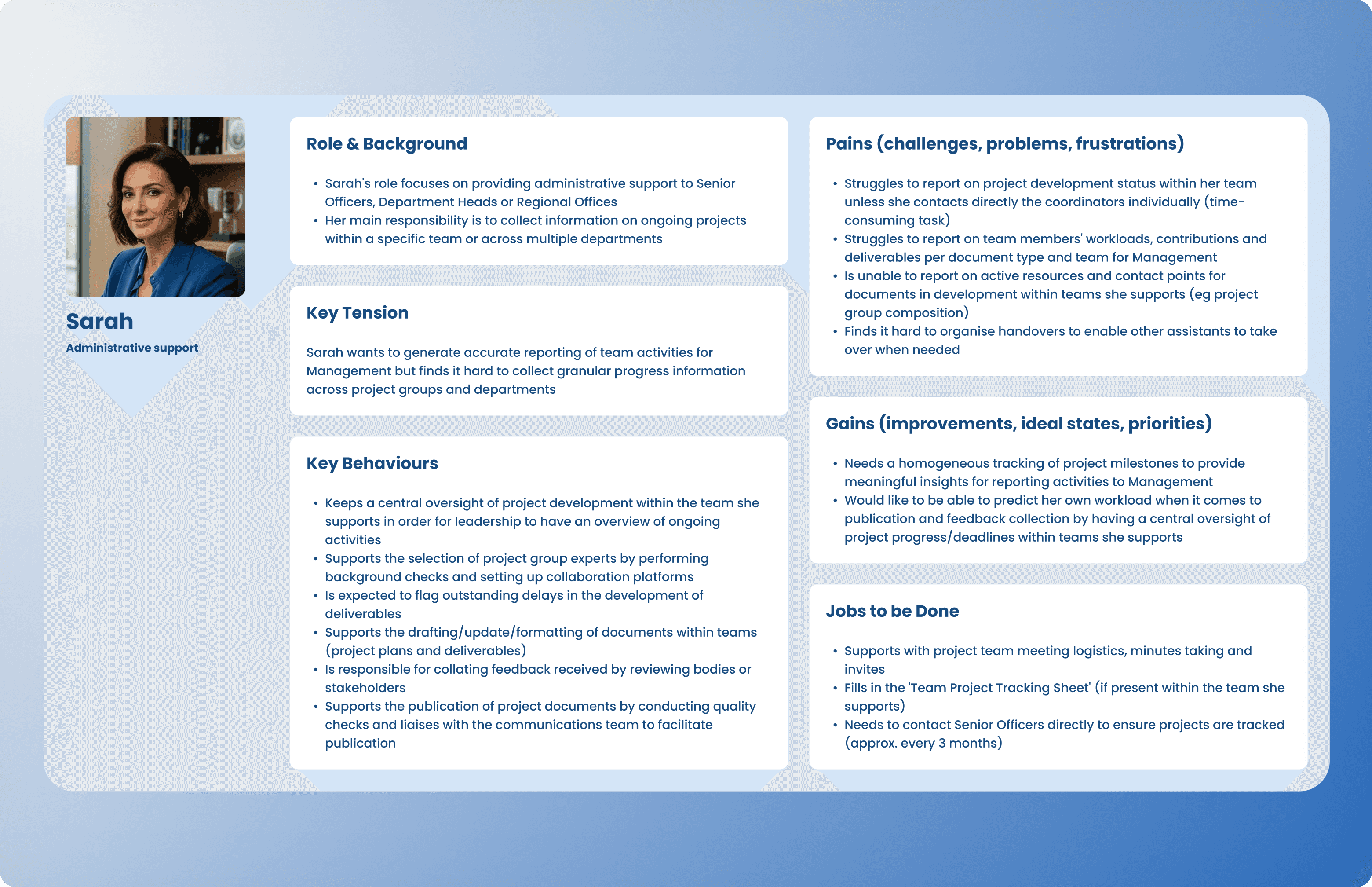
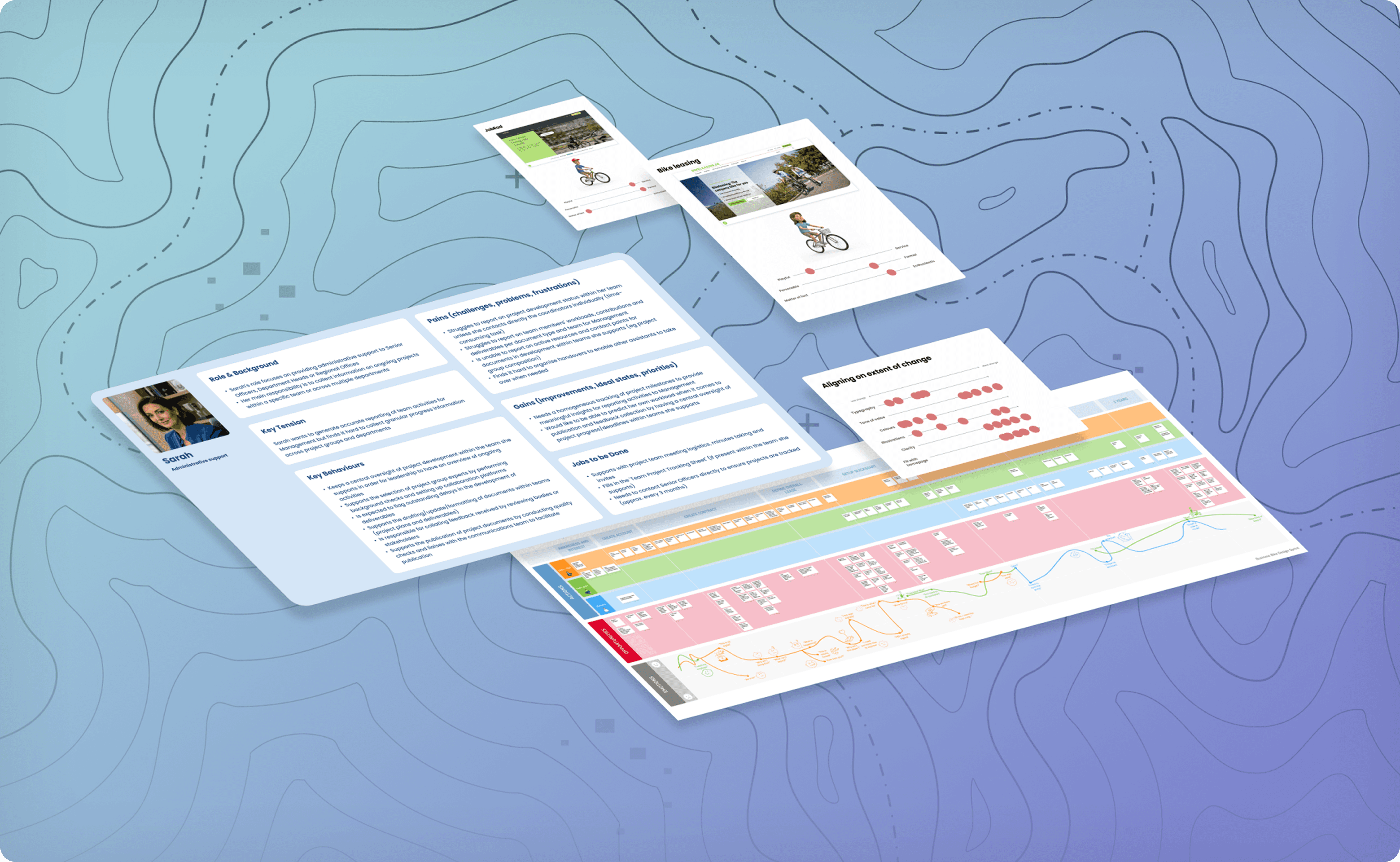
Personas created after 14 interviews with various stakeholders at an EU agency

Personas created after 14 interviews with various stakeholders at an EU agency

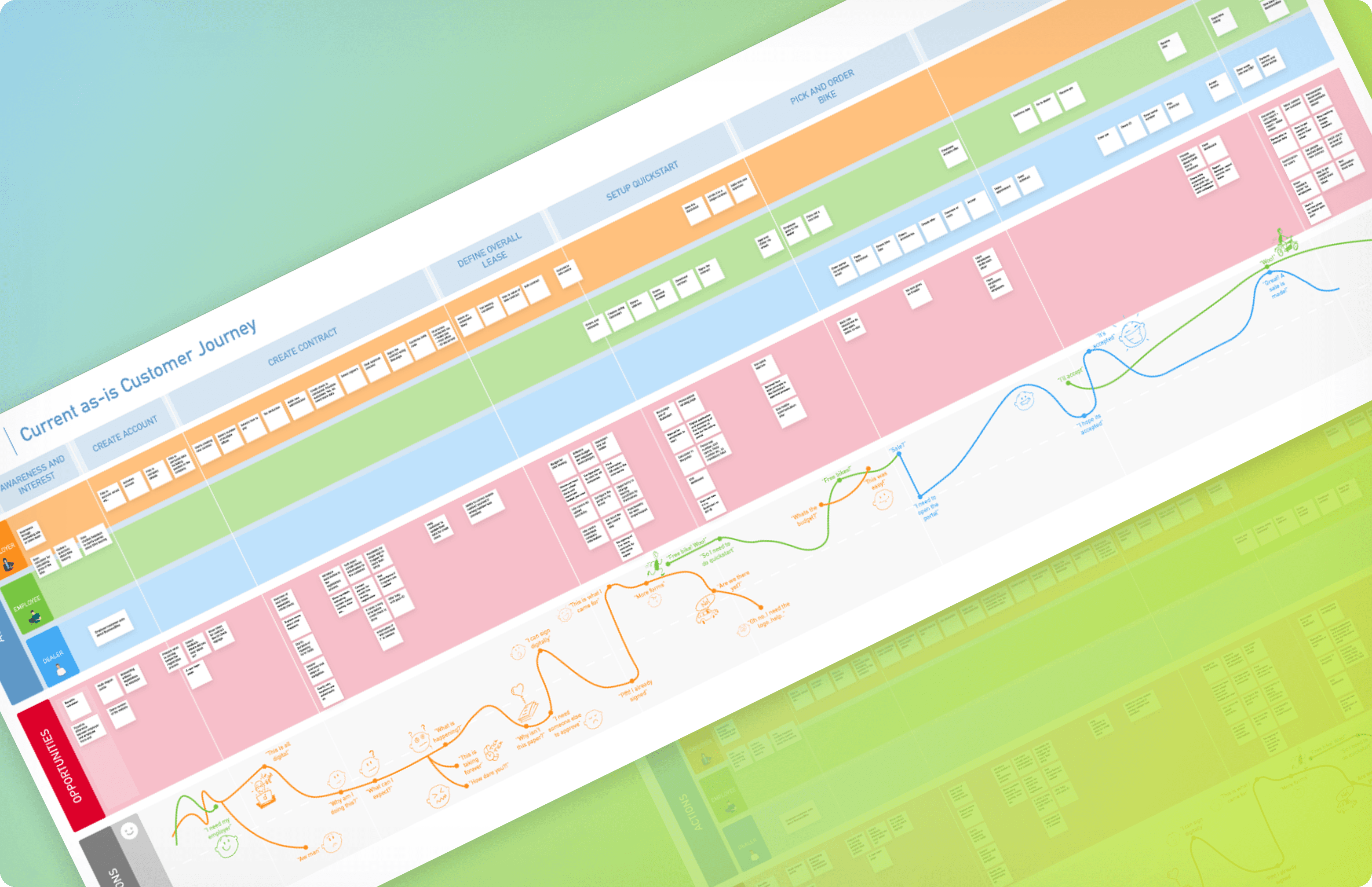
Mapping the customer journey at a bike leasing start-up

Mapping the customer journey at a bike leasing start-up

Cliche, but design is a team sport

Cliche, but design is a team sport

Organisations have personalities. They have quirks, unwritten rules, and ways of doing things that make perfect sense to insiders but are invisible to everyone else

Organisations have personalities. They have quirks, unwritten rules, and ways of doing things that make perfect sense to insiders but are invisible to everyone else

When you're trying to make substantial changes, whether it's rebranding or optimising processes, the people who actually know how things work need to be in the room.

But here's the challenge: getting those organisational experts to share their knowledge in a way that decision makers can actually use.

I've found workshops to be incredibly helpful to make this happen. When I get key decision makers and the people who know the real story together in the same room, that's when we stop talking past each other and start moving in the same direction.
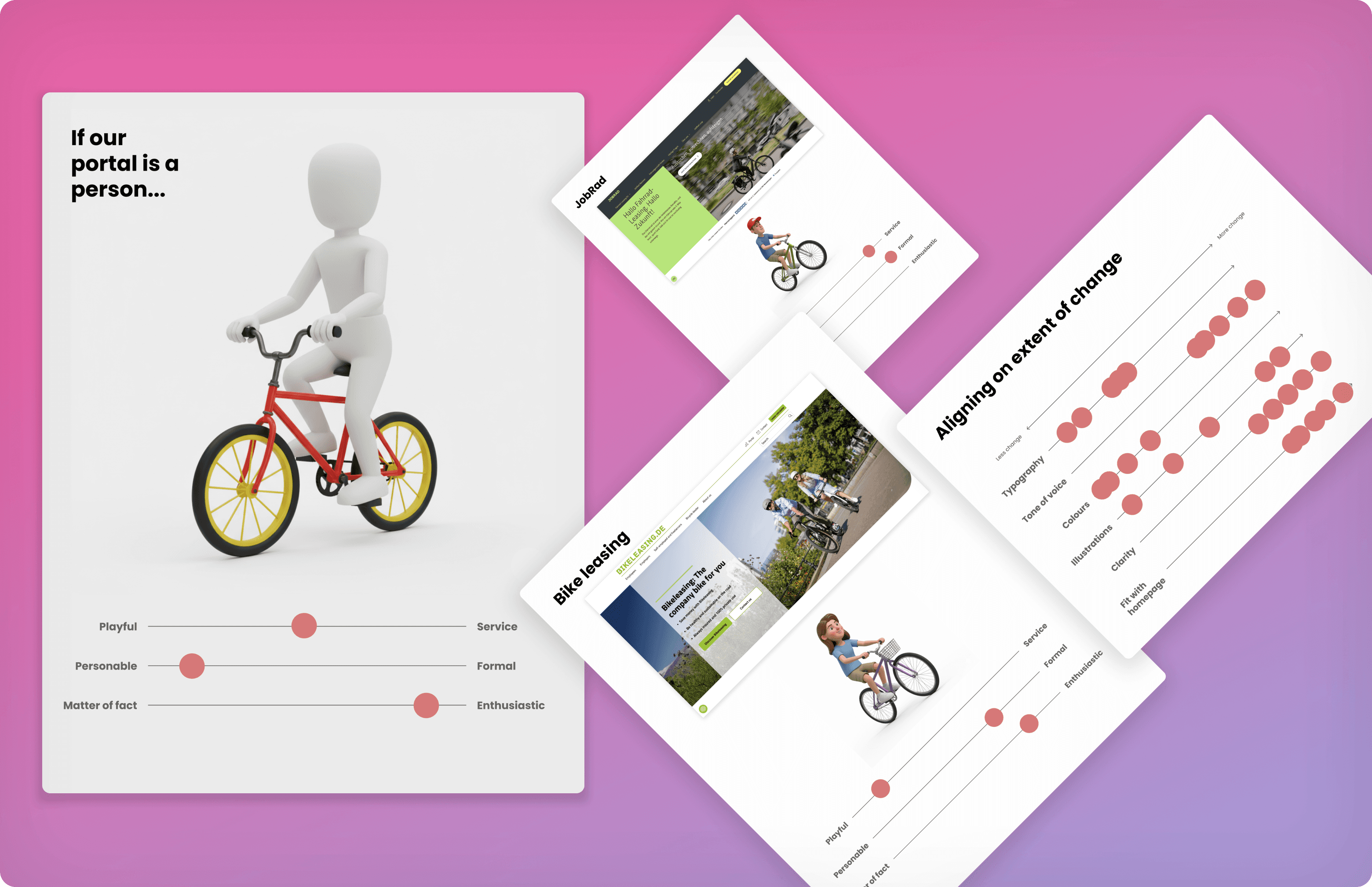
UI and branding direction workshop at the bike leasing start-up

UI and branding direction workshop at the bike leasing start-up

Scaling design in increments

Scaling design in increments

Fast-paced businesses don't have time for perfect. When everyone's scrambling to hit deadlines and deliver results, good enough is actually good strategy.

Fast-paced businesses don't have time for perfect. When everyone's scrambling to hit deadlines and deliver results, good enough is actually good strategy.

But here's what I've learned: even in the chaos, there are always small opportunities to make things better. Not grand redesigns or month-long research projects, but smart incremental improvements that actually fit within business constraints.

I've gotten good at spotting these moments and making the case for tiny upgrades that serve multiple priorities. The trick is finding improvements that align with what the business already wants to achieve, not fighting against the current.

An investigation into enabling multi-brand evolved into a workflow that allows both design and development to manage and maintain tokens at scale and speed

(The content has been blurred to respect client confidentiality)

An investigation into enabling multi-brand evolved into a workflow that allows both design and development to manage and maintain tokens at scale and speed

(The content has been blurred to respect client confidentiality)

Conclusion

Conclusion

Thinking about the future…

Thinking about the future…

While existential dread plagues traditional careers focused on building digital products as AI adoption rises, I'm genuinely optimistic. Throughout my consulting career, I keep coming back to this: people are infinitely complex and fascinating. Every new environment throws different challenges at me, and I love that. The big, messy problems in sensitive domains with complex data and high stakes are where design gets interesting.

I don't want to be the designer who slaps a nice template on a problem or copies what worked for some big tech company. I want to tackle the problems that demand you really dig in and understand both the team you're working with and the people they're trying to serve. Those are the problems that can't be automated away.

Want to know more?

© Arun Abraham John 2025

Thank you for your time!