Reading time: 10 minutes
Leading design for a fintech white-label product
Leading agile design, scalable systems, and innovation sprints for rapid enterprise deployment
The context
Productising expertise
Deloitte needed to rapidly deliver client value by creating an end-to-end digital solution to replace fragmented touchpoints in complex financial processes. Drawing from extensive experience digitising financial workflows, the accumulated domain knowledge could be distilled into a white-label product suite, a collection of modular features stitched together to create tailored customer journeys in the client's brand.
As the sole designer, I worked alongside financial services subject matter experts with over a decade of domain experience. My key responsibility was to design features and set up design and development workflows to support scalable, repeatable delivery.
My contribution
Designing for scalable, repeatable delivery
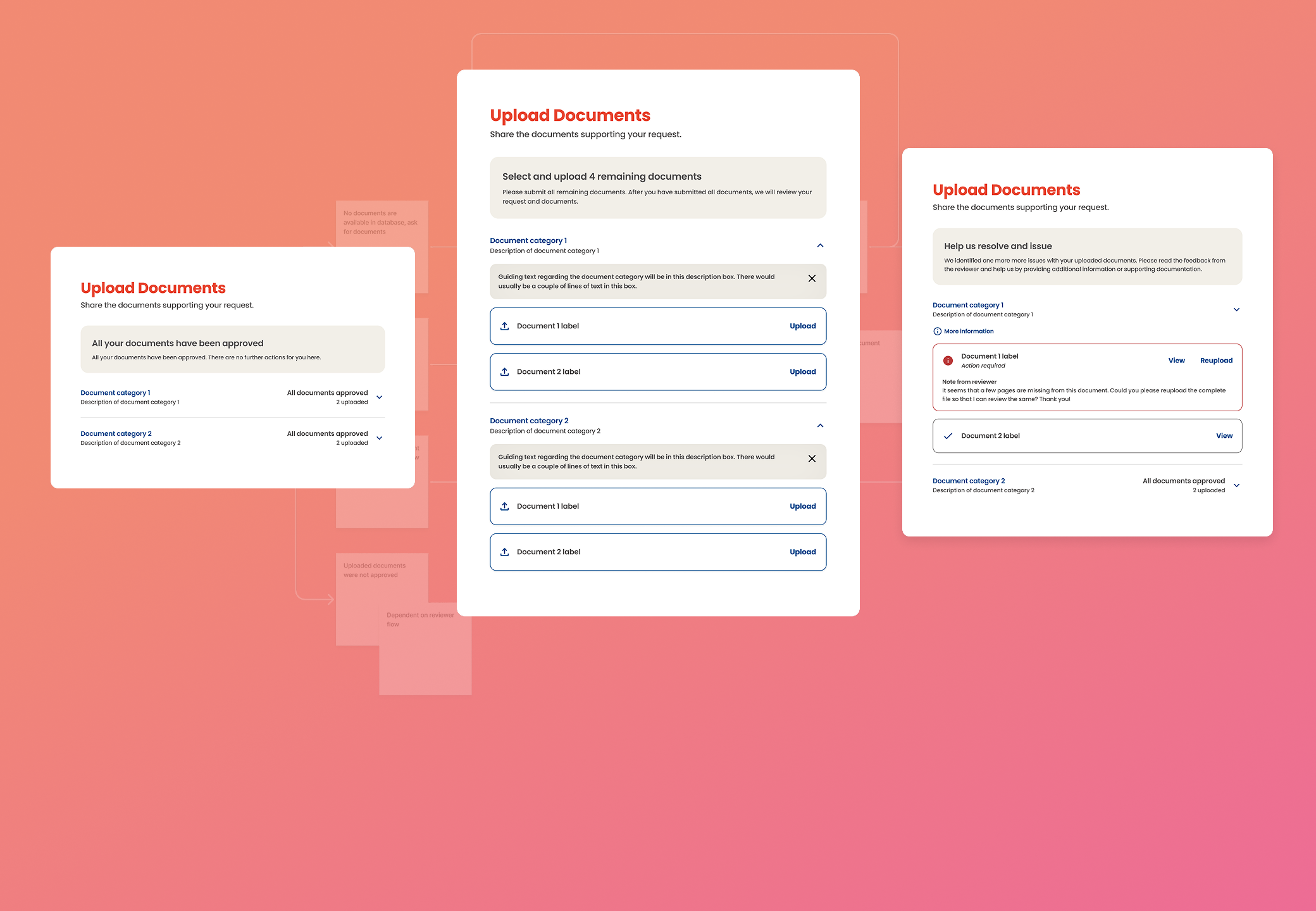
I designed 7 complex features targeting dual user groups, requestors and reviewers, as part of an agile development team. Each feature went through the same rigorous process: requirements alignment, detailed flow mapping, UI detailing across all variants, and structured handover to development.
The document upload feature is representative of the approach taken across all 7. I walk through it in full below.
Designing document upload
Defining the journey
Before touching the UI, I created a detailed flow map covering the full decision logic for the document upload feature: what happens when documents are missing, when they are under review, when the reviewer flags an issue, and when all documents are approved. This was reviewed with the product manager, tech lead, and a subject matter expert before any screens were designed.
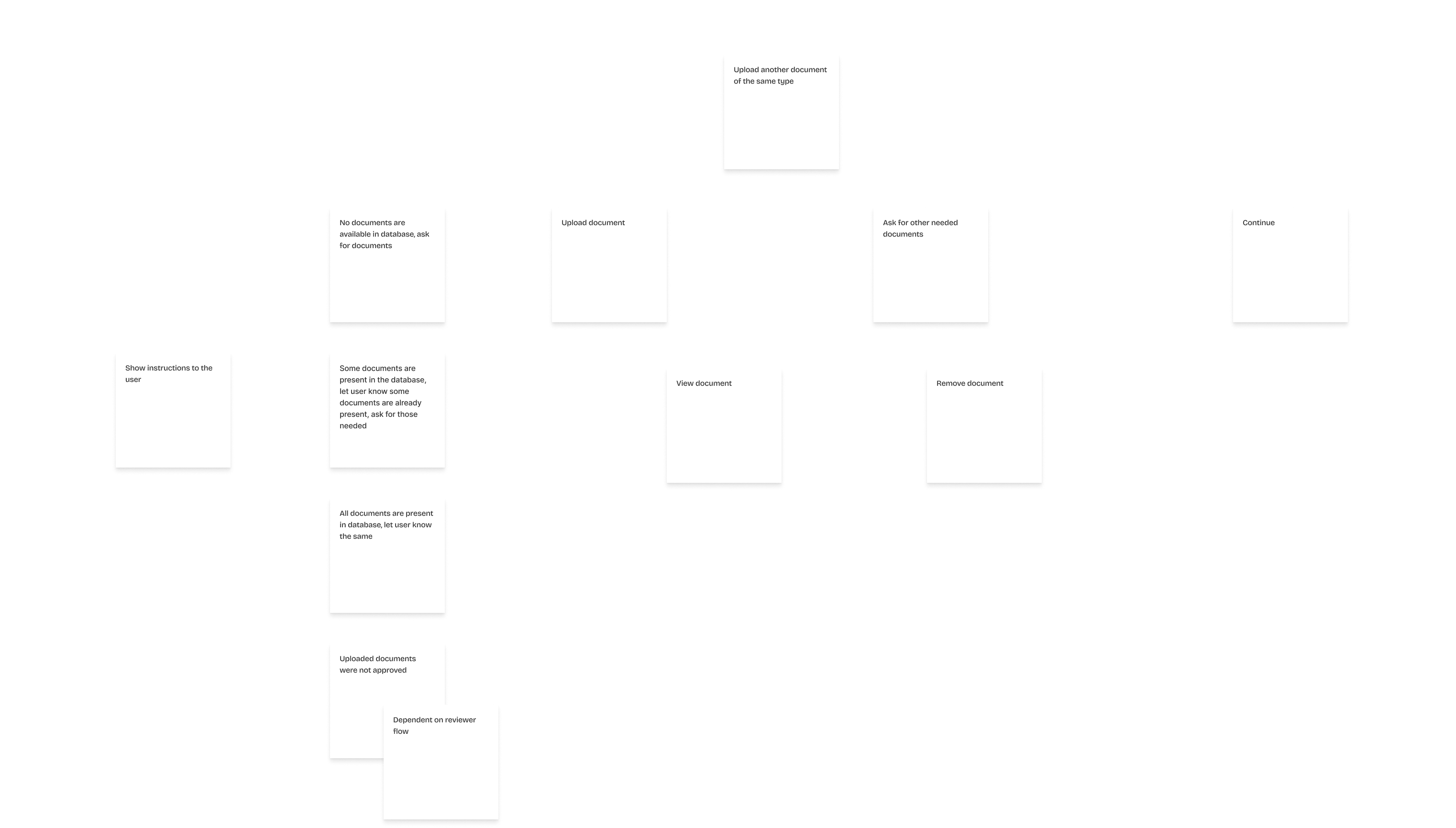
Flow map reviewed with PM, tech lead, and subject matter expert before UI work began
Detailing the screens
The interactive prototype below covers the complete document upload journey for an SME lending application. It is structurally faithful to the designed feature, including all states, all transitions, and all edge cases. Switch between states using the tabs, and interact with everything.
Enabling multi-brand
From weeks to 5 days
I led the creation of a scalable design system that accelerated product deployment across different client brands. The critical insight was that managing brand styles needed to happen not only in Figma but within the codebase itself. Two workflows were developed and implemented, each more optimised than the last.
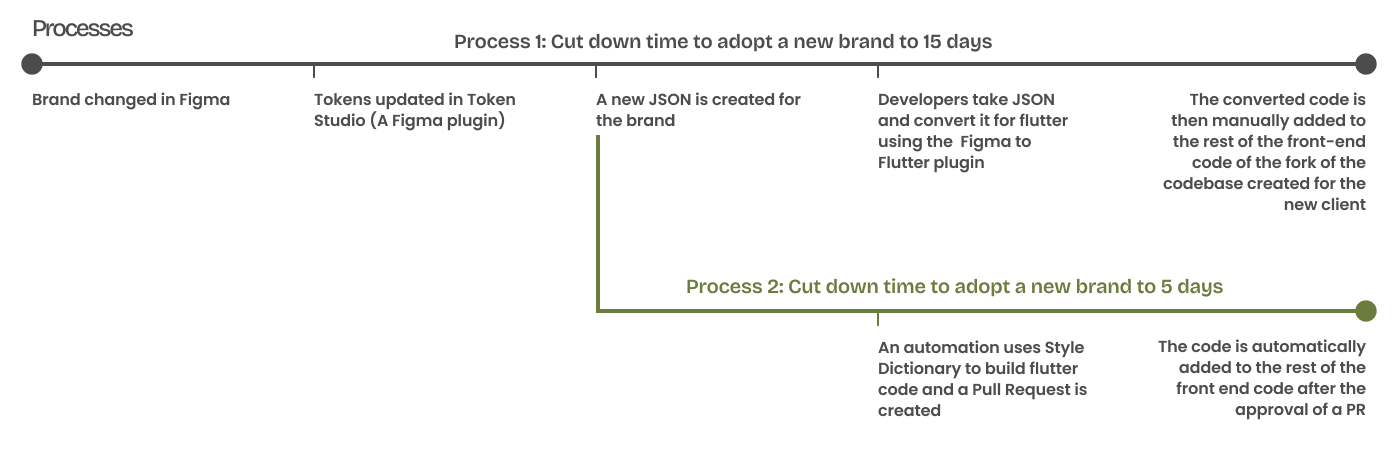
Two workflows implemented to reduce brand adoption time from 15 days to 5 days
Innovation sprints
Explore, Make, Validate
Senior leadership needed a cost-effective way to test potential concept directions. I co-facilitated 10-day design sprints with the product manager, starting with opportunity areas and resulting in proof of concepts. Each sprint followed a clear cycle: Explore to gain insights into trends and customer needs, Make to prototype the future tangibly, and Validate to test with potential customers or subject matter experts.
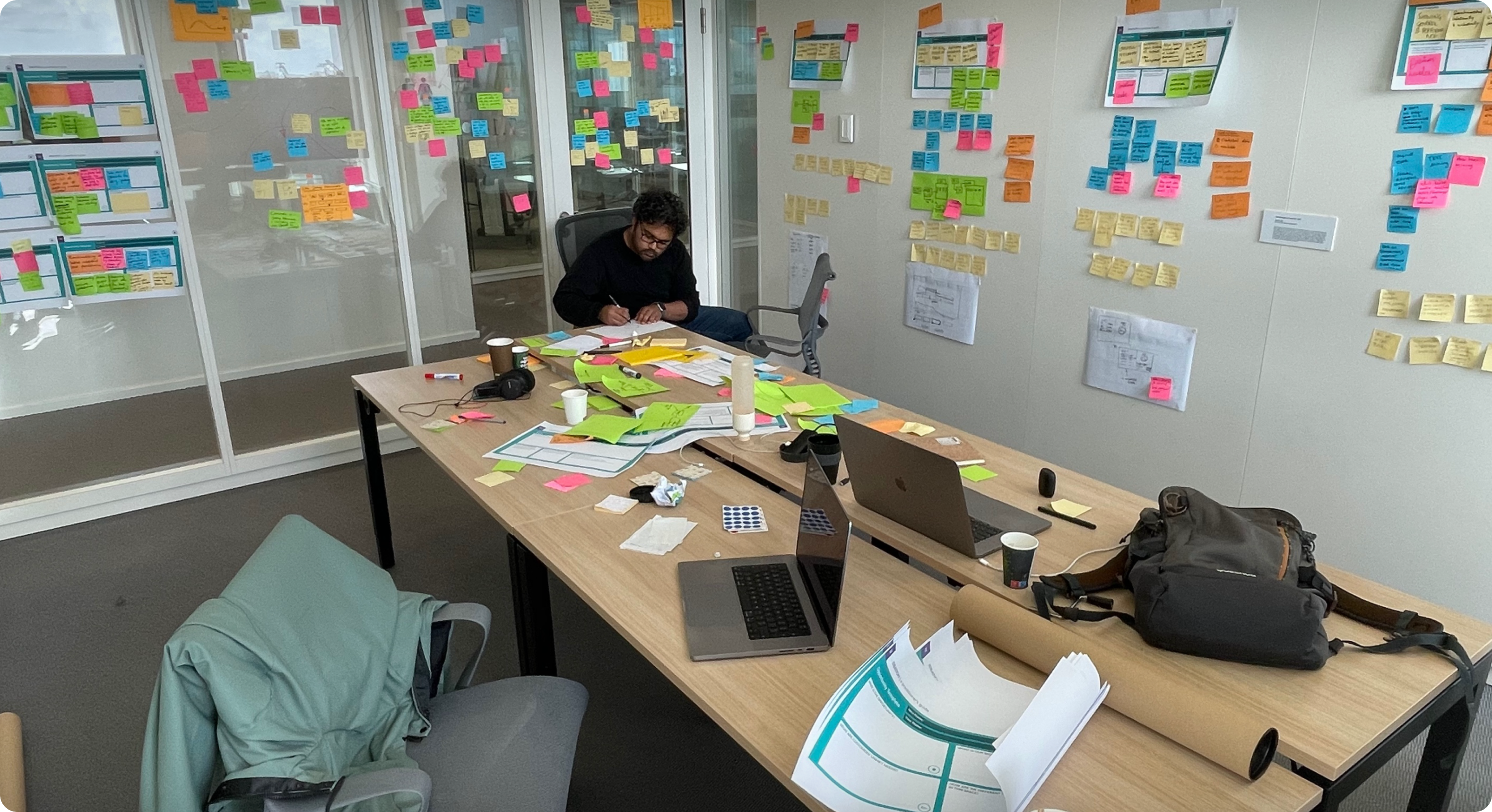
One of the 10-day innovation sprints co-facilitated with the product manager
Clarity through documentation
Building for the delivery team
The product served delivery teams working on client projects. Comprehensive documentation was essential, because teams could not afford to miss context when delivering customised journeys. Together with the product manager, I documented functional specifications for every feature on Confluence and managed copy and language translations through a structured Excel sheet.
What did this mean for me
Lessons that stayed
Curiosity saves
In a project where the delivery team is the first user of the product, understanding what helps them deliver in different client environments mattered as much as end-user experience. Not being afraid to ask questions was key to delivering actual value.
Avoid surprises
Bringing decision makers and developers along the design process early was not optional. Waiting for polished slideware before showing work cost time and created misalignment. The earlier the feedback, the better the outcome.
Leadership through design
When there were conflicting directions or discussions about the value of an initiative, prototyping and showing potential made a visible impact. A working prototype said more than any argument.
Want to know more about this project?
Email me